

Huang Hui Delivers Invited Lectures to HKFI, Chile Governance Exchange Programme and Guangdong Foreign-Related Lawyer Talent Advanced Training Programme
01.10.2026 |NEWS&ARTICLES
Our Managing Partner, Mr Huang Hui, was recently invited to deliver lectures to three distinct audiences: the Guangdong Foreign-Related Lawyer Talent Advanced Training Programme, the Hong Kong Federation of Insurers (“HKFI”), and a Chilean delegation on governance and public administration experience. The sessions covered international maritime arbitration, the impact of the newly amended PRC Maritime Code on marine insurance, and China’s commercial mediation system and practice.Although the audiences, jurisdictions and languages differed, the underlying theme was consistent: sharing practical Chinese experience in maritime and commercial dispute resolution, insurance and multi-door dispute settlement with the wider professional community.

Guangdong Foreign-Related Lawyer Talent Advanced Training
Programme: How International Maritime Arbitration Works in Practice
At the foreign-related lawyer training programme co-organised by the Guangdong Provincial Department of Justice and the Guangdong Lawyers Association, Mr Huang spoke on International Maritime Arbitration, focusing on what it is, how it operates, and how Chinese lawyers can participate.
He described maritime arbitration as a reliable and effective route for resolving commercial disputes, often functioning as a “VIP channel” compared with court litigation. Its principal advantages include cross-border enforceability under the New York Convention, confidentiality through private hearings, and expert determination supported by a combination of legal rules, institutional rules and practical industry knowledge.

The lecture mapped out the arbitration landscape across key jurisdictions — London's LMAA, Singapore's SCMA and SIAC, Hong Kong's HKIAC and HKMAG, and the Mainland's CMAC and its Greater Bay Area Arbitration Centre — and highlighted three key developments:
• Ad hoc Arbitration: Article 82 of the newly amended PRC Arbitration Law (effective 1 March 2026) permits parties to cross-border maritime disputes to agree on ad hoc arbitration with China as the seat.
• Preservation Measures: Under the Special Maritime Procedure Law, parties to overseas arbitration may apply to Mainland maritime courts for evidence and property preservation, with no distinction between institutional and ad hoc arbitration.
• Role of Chinese Lawyers: Chinese lawyers can engage at many levels—from clause review, domestic preservation, and overseas arbitration support to expert opinions on Chinese law, court representation, and serving as arbitrators.
"China’s maritime litigation is already at the forefront globally, but maritime arbitration is just beginning," Mr Huang observed. "This gap represents significant business opportunities for cross-border lawyers."
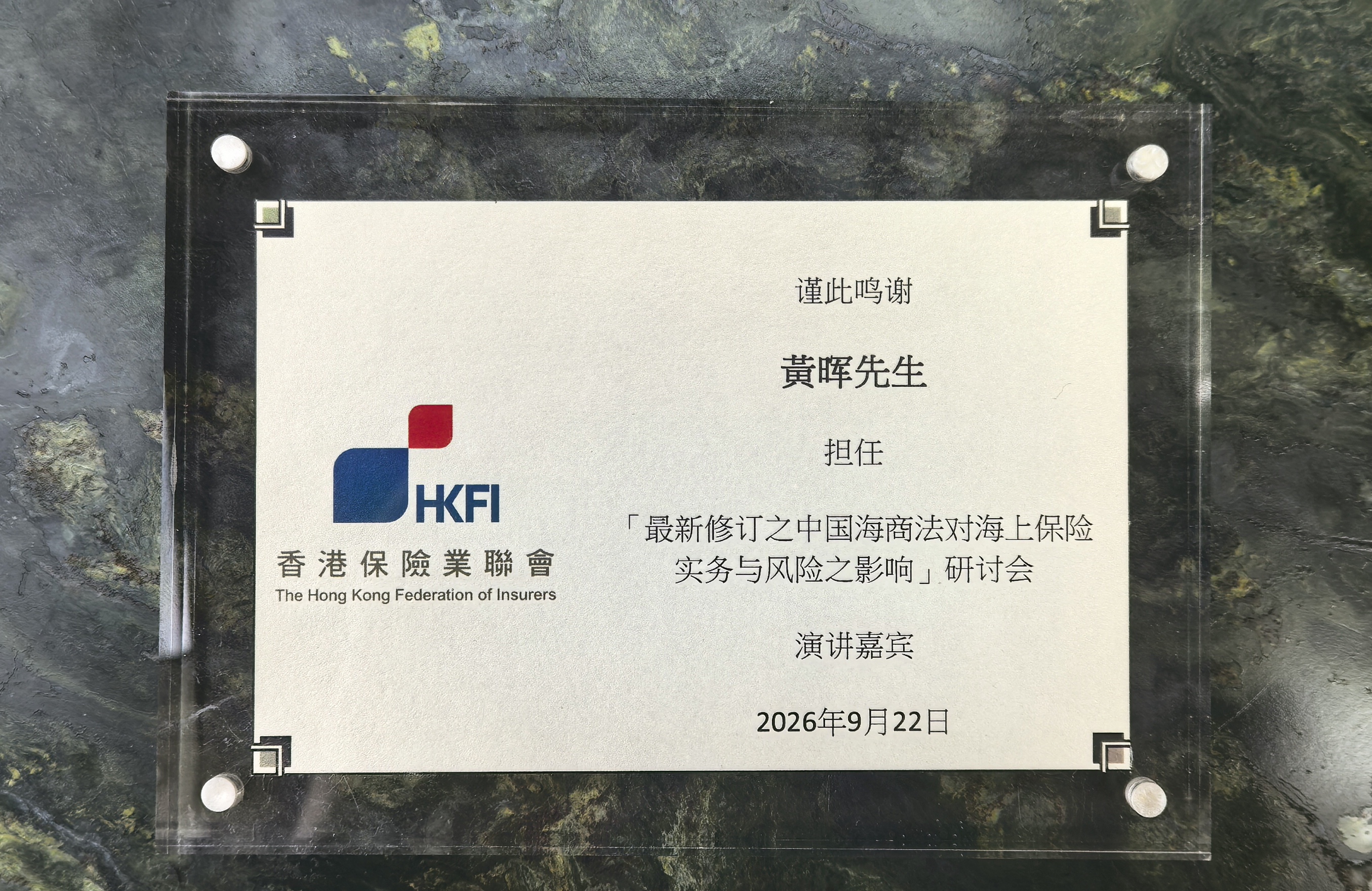
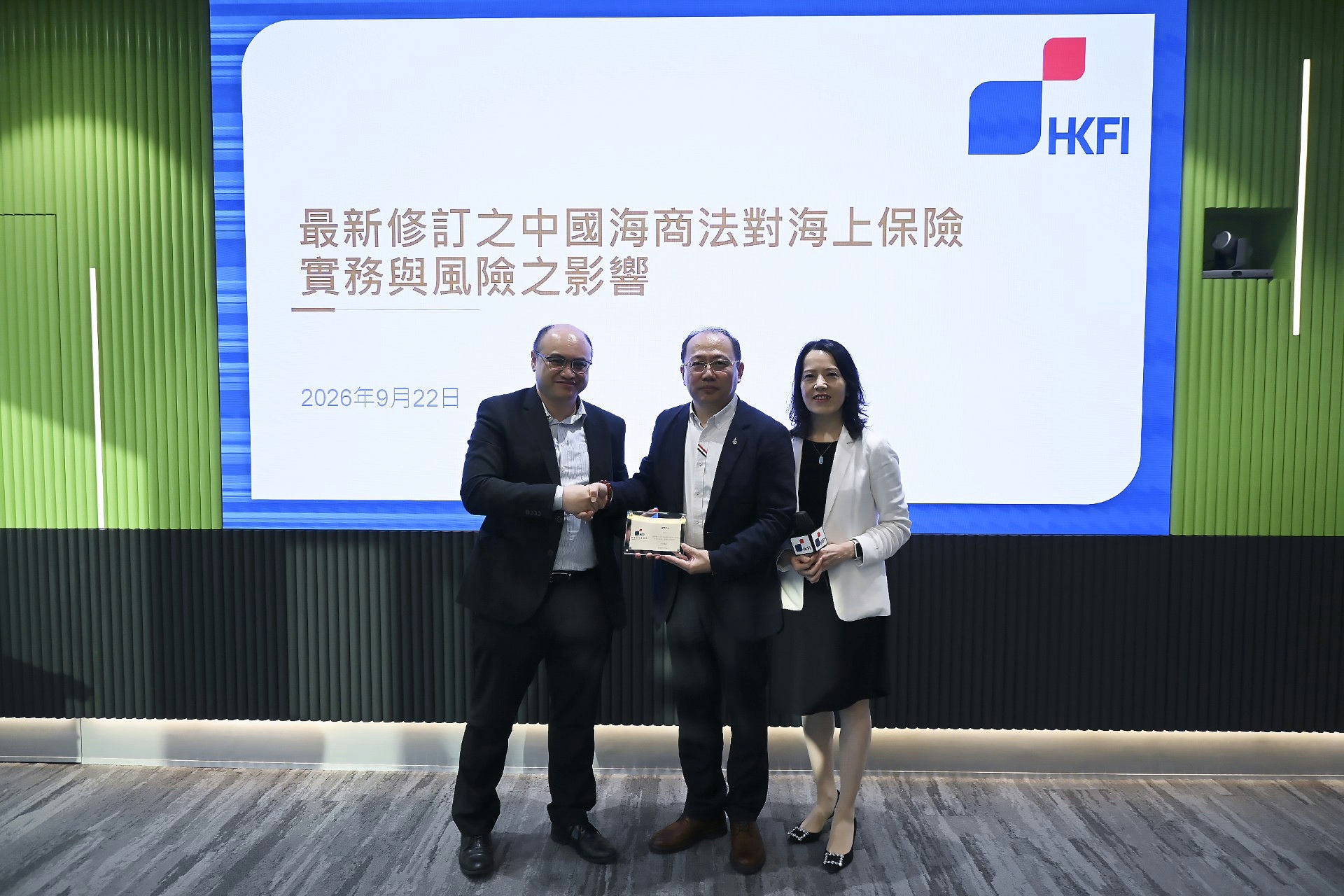
HKFI: Three Additions, Nine Amendments and Three Points of Comparison — Marine Insurance under the Newly Amended PRC Maritime Code
At the HKFI session, Mr Huang focused on Chapter 13, “Marine Insurance Contracts”, of the newly amended PRC Maritime Code (Articles 240–282, comprising six sections and 43 articles). He summarised the changes as follows:
• Three additions: insurance for ships under construction; the duty to highlight and explain standard terms; and open cover contracts.
• Nine amendments: insurable value; the duty of disclosure; double insurance; termination after liability has attached; declaration under open cover; warranty clauses; unseaworthiness; missing ships; and abandonment.
• Three points of comparison with the UK Marine Insurance Act 1906: areas of divergence and convergence concerning the name in which subrogation is exercised, the strictness of liability under warranty clauses, and the regime for ships under construction.
Addressing Hong Kong insurers, Mr Huang highlighted several key provisions:
• Article 249: Marine insurance is treated as commercial insurance, with an “active highlighting and passive explanation” approach. Exclusions, deductibles, warranties, liability limits and trading limits must be expressly highlighted.
• Article 248: Where the duty of disclosure is breached, deliberate non-disclosure entitles the insurer to rescind the contract without refund of premium; non-deliberate non-disclosure permits rescission with refund of premium or an adjustment to the premium. The right of rescission lapses if not exercised within 30 days of becoming aware of the relevant facts.
• Article 259: Under open cover, declarations must now be made before each shipment, rather than after the insured becomes aware of shipment.
• Article 261: Breach of warranty no longer automatically discharges the insurer’s liability; a defence based on “no effect on the occurrence of the insured peril or prior remedy of the breach” has been introduced.
• Article 278: Under Chinese law, insurers exercise subrogation in their own name, whereas under English law the insurer generally brings subrogated claims in the name of the insured.
Mr Huang illustrated these provisions through a series of cases, including the XCMG automobile export cargo damage claim, the Senda case on termination of “warehouse-to-warehouse” cover, the potassium chloride wet-damage claim, the seaworthiness disputes involving the Hua** and the Jiang**, and the constructive total loss of the Tianlong. These cases turned the statutory text into practical checklists for underwriting, claims handling and recovery.
He concluded: "While the substantive indemnity standards have largely remained unchanged in this round of amendments, the real incremental value lies in the procedural rules and the rules balancing the interests of the parties"

Chilean Seminar on Governance Experience: How Commercial Mediation Works in China
At the invitation of the International, Hong Kong and Macao Training Centre of the Party School of the CPC Central Committee (National Academy of Governance), Mr Huang returned to Guangzhou to explain China’s commercial mediation system and practice to a Chilean seminar on governance experience.
At the invitation of the International, Hong Kong and Macao Training Centre of the Party School of the CPC Central Committee (National Academy of Governance), Mr Huang returned to Guangzhou to explain China’s commercial mediation system and practice to a Chilean seminar on governance experience.
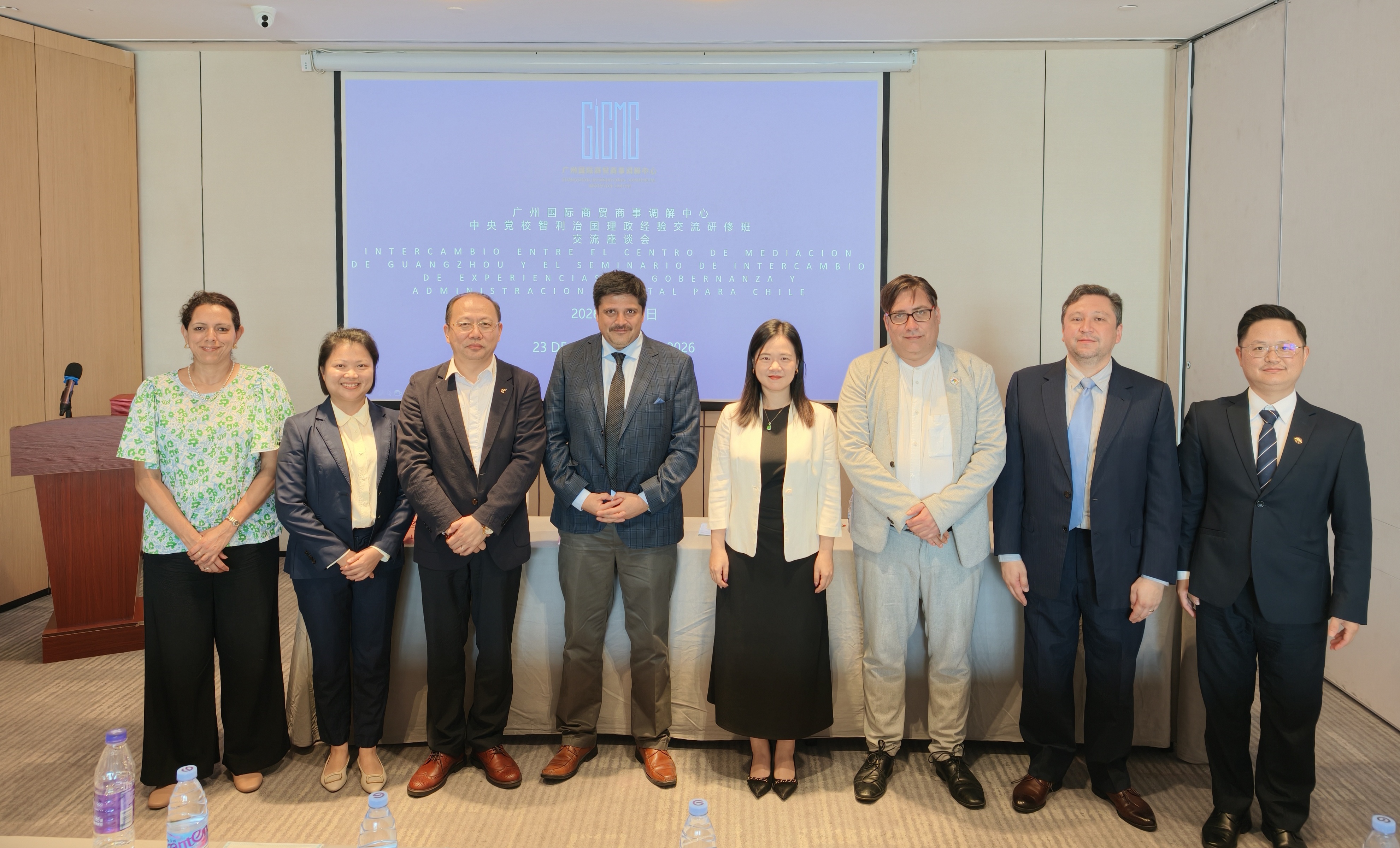
Speaking in his dual capacity as a director of the Guangzhou International Commercial Mediation Centre and managing partner of Huang & Huang, Mr Huang covered three key aspects:
• The legal framework: The Regulations on Commercial Mediation (State Council Order No. 827), which came into force on 1 May 2026; China’s signing of the Singapore Convention on Mediation in 2019; and efforts in the Greater Bay Area, free trade zones and the Hainan Free Trade Port to align rules on foreign-related commercial mediation.
• The operating mechanism: Courts identify suitable cases, obtain parties’ consent, and appoint special mediators. Judges manage procedures while mediators leverage industry expertise. Mediation statements or judicial confirmations grant enforceability.
• Case Study: A Shenzhen supply-chain company paid RMB 18,630 for air freight, but the goods took 34 days to reach the US without an airway bill, raising suspicion that it had been shipped by sea. The Yuexiu Court appointed Mr Huang as a specially appointed mediator, and the case was settled in court on 30 May 2025. The defendant paid RMB 6,000, with a further RMB 4,000 payable in the event of late payment. The case ran from filing to conclusion in about two and a half months, and was selected as one of the “Top Ten Typical Mediation Cases 2024–2025” by the Guangzhou Intermediate People’s Court and the Guangzhou Mediation Association.
In his closing remarks, Mr Huang observed that professional mediators, court-backed enforceability and the voluntary participation of the parties are the three pillars of successful cross-border commercial mediation.
Mr Huang’s recent series of invited lectures reflects the same professional standing and industry recognition that have long characterised his practice. The esteem in which he is held by peers and clients alike bears witness to Huang & Huang’s deep expertise and enduring influence in maritime law, foreign-related arbitration and commercial mediation.
To foreign-related practitioners, he spoke on the seat of arbitration, ad hoc arbitration and cross-border preservation measures. To Hong Kong insurers, he unpacked the three additions, nine amendments and three points of comparison under the newly amended PRC Maritime Code, together with the 30-day exclusion period. To the Chilean seminar on governance experience, he explained commercial mediation, judicial confirmation and the alignment of rules across the Greater Bay Area.
These engagements reflect Huang & Huang’s continuing work in maritime law, insurance, arbitration and commercial mediation.